
What If You Can't Afford to Move Out?
For many young adults, moving out is becoming increasingly difficult.
You may have a job and a steady income, but still not earn enough to comfortably buy a home. At the same time, renting can be expensive and finding an available apartment can be difficult.
So what do you do if you want to live independently, but the traditional options are simply out of reach?
One possibility is to start smaller.
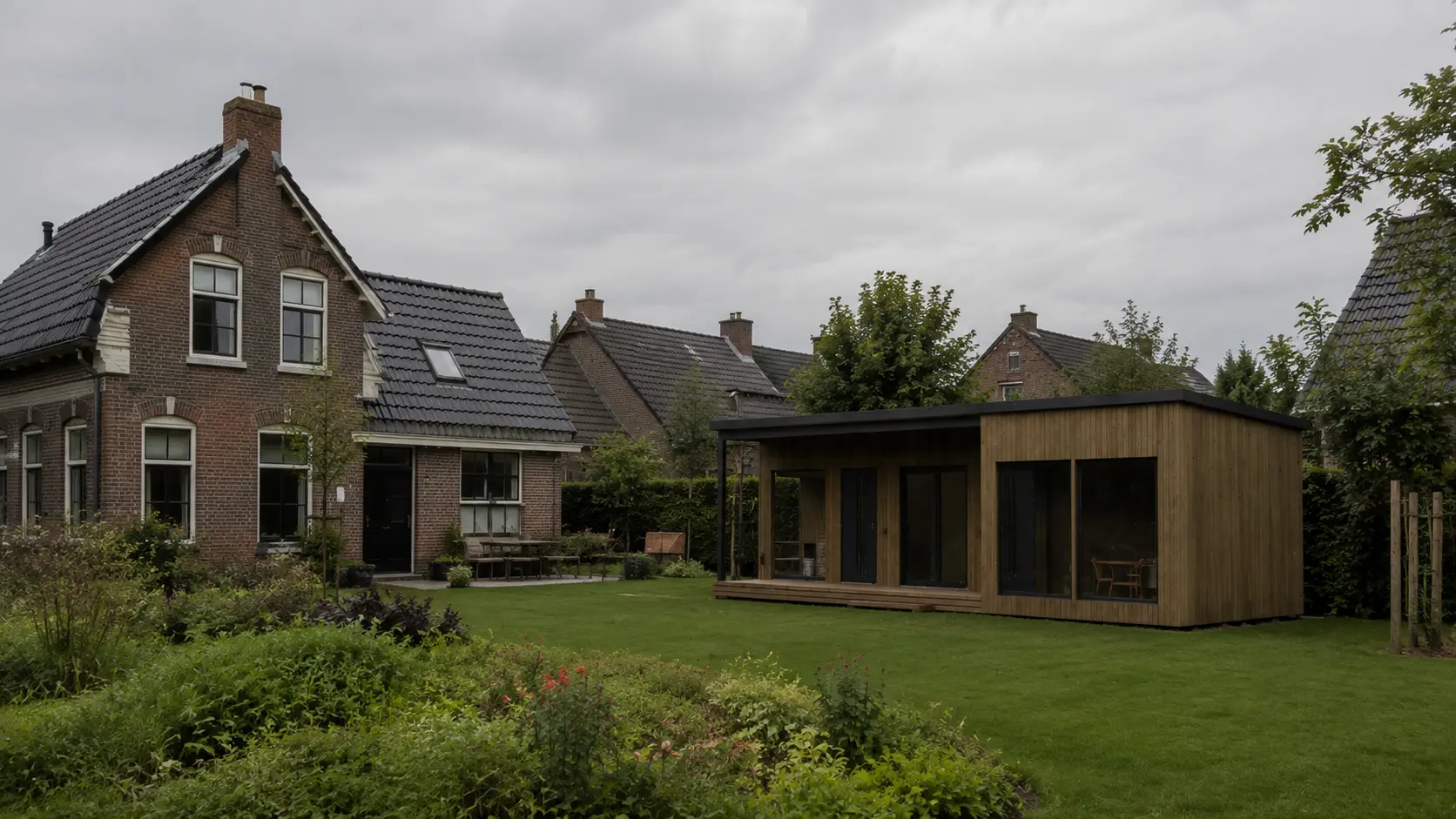
The Dutch Housing Problem
The Netherlands is a good example of how difficult the situation has become.
In 2024, the number of people under 25 leaving the parental home and entering the housing market fell by 12%, from 125,000 to 96,000. At the same time, the number of 25–34-year-olds living with their parents increased by 5.6%. Statistics Netherlands (CBS) also reports that 21.8% of 25–29-year-olds lived with their parents in 2025.
CBS has also found that young people living with their parents increasingly want to buy their own home rather than rent. In 2021, around 46% of young people aged 18–34 who wanted to leave home said that buying their own home was their preferred option.
The problem is that wanting to own a home and being able to afford one are two very different things.
What If You Started With a Smaller Home?
For families with suitable land, there is another possibility.
Instead of finding an apartment somewhere else, a young adult could potentially have a small independent home built on their parents' or grandparents' property.
The main house remains the family home.
A separate modular home becomes a separate household.
It could provide:
- A bedroom
- Bathroom
- Kitchen
- Living space
- Private entrance
- Its own outdoor space
The important difference is that this is not simply moving into the parents' house.
It is having your own home, while remaining close to family.
Whether this is possible depends on local planning, building and land-use regulations. A suitable garden does not automatically mean that another dwelling can legally be built there.
Instead of Paying Rent, You Own the Home
This is perhaps the most interesting part of the idea.
When you rent an apartment, a large part of your monthly housing payment goes towards the cost of living in someone else's property.
When you own your home, mortgage payments can instead build equity in an asset you own.
That does not make owning automatically cheaper. Buying requires capital, financing, maintenance, insurance, taxes and other costs.
But the financial destination is different.
You are paying towards an asset that belongs to you.
Over time, that ownership can potentially become the foundation for your next home.
What Could This Look Like for You?
The numbers are different for everyone. Your monthly budget, interest rate and the cost of the home all affect how ownership compares with renting.
Want to see what the numbers could look like in your situation?
Explore the Rent vs. Own calculator →
Your First Home Does Not Have to Be Your Final Home
A small modular home could therefore be viewed as a first step rather than a permanent solution.
Imagine a young person who cannot currently afford a conventional apartment.
Instead, they purchase a smaller home on family land.
Over the following years, they make mortgage payments and build equity.
If the property increases in value, that may create additional equity. If the owner eventually sells the home, the proceeds could potentially contribute towards the purchase of a larger property.
Alternatively, depending on the location, financing and regulations, the first home could potentially be retained and rented out.
The result could look something like:
Small first home → build equity → sell or rent it → use the equity towards a larger home.
This is not guaranteed, and property values can also fall. Financing conditions and taxes matter too.
But the basic idea is different from simply waiting until you can afford the conventional home you want.
Family Land Changes the Equation
The biggest obstacle to this idea is often the land.
Buying both land and a house can make a first home expensive.
But some families already own land.
A large garden, rural property or family plot may potentially have space for a separate dwelling.
If planning rules allow it, the land does not necessarily have to be purchased from scratch.
That can make a small home considerably more interesting as a first step into ownership.
It also creates an intergenerational possibility.
Parents or grandparents provide the land.
The younger generation provides the financing for the home.
The result is two independent households on the same property.
How Small Could the First Home Be?
A first home does not necessarily need to be large.
For one person or a couple, a compact home can provide the essentials without the cost and maintenance associated with a conventional family house.
A well-designed 30 m² home can include a bedroom, bathroom, kitchen and living space.
The goal is not to recreate a 100 m² house in miniature.
It is to create a complete independent home at a smaller scale.
What About the Future?
The most important question is not whether a small home is perfect forever.
It is whether it can improve your position compared with your current alternatives.
If your choices are:
A. Continue living with your parents because you cannot afford to move out.
B. Pay rent indefinitely for an apartment you do not own.
C. Buy or build a smaller home that you actually own.
Option C may be worth considering.
Not because it is automatically cheaper or better, but because it potentially combines independence with ownership.
This Is Not Only a Dutch Problem
The Netherlands provides a particularly clear example, but the underlying issue exists elsewhere in Europe too.
Housing costs, limited supply and difficult access to the property market can make it increasingly difficult for younger people to establish independent households.
The exact numbers and regulations differ between countries.
But the basic question remains relevant:
Do you have to start your housing journey with the home you eventually want to own?
Perhaps not.
A Different Way to Enter the Housing Market
A small modular home on family land is not a solution for everyone.
There needs to be suitable land, planning permission, financing and a location where such a home makes sense.
But for families where those conditions exist, it offers an alternative way of thinking about the first home.
You do not necessarily have to wait until you can afford the perfect apartment.
You could start with something smaller.
Own it. Build equity. And potentially use that first step to reach the next one.